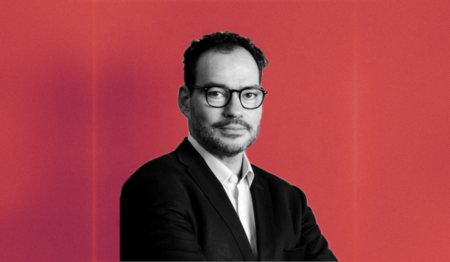


Belém – The capitalization of the Tropical Forest Forever Facility (TFFF) started within the Brazilian government’s expectations, despite a different mix of initial investor countries than anticipated, says Joao Paulo Resende, Subsecretary for Economic and Fiscal Affairs at the Ministry of Finance and the official responsible for the fund.
“Since Brazil announced its US$1 billion contribution, the game has changed. I haven’t stopped receiving messages from countries and investors wanting to understand the TFFF,” he says in an interview with Reset, where he discussed the expectation of new contributions and when the fund should go to the market to raise capital from investors and begin paying for the conservation of tropical forests.
The US$5.5 billion in investment commitments from countries to the TFFF, in the first week of COP, was within what you expected, or was there a higher expectation of fundraising at that time?
It was within what we expected, for different reasons. The amount presented by Norway was a very positive surprise. We did not expect it to reach that value. On the other hand, we expected an announcement from Germany, and we know it will come, because the Prime Minister was quite forceful in the statement he made, but he did not announce a figure. One thing compensated for the other. This was the [total] figure we imagined would happen, but not necessarily with the countries that contributed.
And with which other countries are conversations heating up? There has been talk of China; I also heard something about Japan. Who are you talking to right now?
It is important to keep in mind that there were six countries we had been talking to for more than a year and a half. Those that made announcements now are in this group: Norway, France, and Germany. But there is another group of countries we started talking to more recently. It is natural that they will take longer to understand what it is and process it internally. Is harder to understand because it is a project that touches on the environment, finance, foreign relations, and often, the office of the presidency or the prime minister itself. That is why we did not expect any announcements, at this moment, from countries that were not part of this initial group. Indonesia, for example, was a great surprise, but it was already in the initial group too.
Now, China was not, Japan was not, Canada was not, Australia was not, many other European countries were not, most of the Gulf countries were not. These countries, as Minister [Fernando] Haddad said, need time to digest, and we believe they will come soon, at the beginning of next year, but we have the whole year to work with, because that is how long Brazil’s COP presidency lasts. We are quite optimistic.
There are countries where we feel we are more advanced, and there are countries we will start talking to now. The Netherlands, for example, was a country that did not make an announcement now; it was not part of the initial group of countries but provided significant resources to cover the structural costs at the World Bank that will start running the TFFF. We raised US$30 million in total for this, including the Netherlands. Why would I give money to set up the fund if I am not going to invest? So, it is a very strong signal from the Netherlands, despite not having made an announcement. We also think Japan is a strong candidate because it has a very close relationship with Brazil. The largest Japanese community outside of Japan is in Brazil. They are always participating in this type of initiative.
And the expectation with China?
Mais do Reset
PECUÁRIA
JBS abandona meta climática que inclui fornecedores
Compromisso do maior frigorífico do mundo agora se refere a apenas 3% das emissões da empresa

FINANÇAS SUSTENTÁVEIS
Calor extremo fará parte de teste de estresse de bancos europeus
Autoridade Bancária prepara nova metodologia para medir perdas em carteiras de crédito; BCE incorpora risco climático às suas garantias
COLUNA - ANA LUCI GRIZZI
El Niño 2026/2027 já é certo: sua empresa tem plano de ação?
Risco climático físico razoavelmente previsível exige gerenciamento; quem não gerenciar terá prejuízos financeiros que não serão cobertos por força maior
FINANÇAS SUSTENTÁVEIS
Bradesco seleciona ‘pipeline realista’ na Amazônia no 4º leilão do Eco Invest
Banco já selecionou dois projetos e vai direcionar 24% dos recursos à bioindustrialização
We also have great expectations that China will come.
Did they not withdraw?
No. There was no indication that they were backing away. And the same goes for the United Kingdom. Neither of them said they would not be able to make an investment. They all said they need to better understand the initiative or, in the case of the United Kingdom, ‘we need to find the right way to do this in line with our reality.’ So, we do not have a ‘no’ from any country. As for China, we think it is a matter of giving time for the idea to mature and for them to enter.
Regarding the next steps, what is your expectation for fundraising from countries and philanthropies during Brazil’s COP presidency, until the end of next year? And how are the negotiations progressing to start raising capital in the market?
The two answers are related. During the negotiations, the condition emerged that Norway imposed: the fund will only really start operating when we reach a minimum threshold [of country contributions] of US$10 billion. I do not want to call it a target, because every time we say ‘target,’ the press starts pressuring us. The condition set by Norway is to achieve US$10 billion by the end of next year. And the expectation is that we will achieve it much faster than that. Right now, we are a little less than halfway to what we need, remembering that we need an additional US$6 billion, because Norway has another condition, which is to contribute a maximum of 20% of the total. So, when we have US$10 billion in the fund, we will have US$2 billion from Norway, not US$3 billion. If we get three more countries with a similar commitment, something between Brazil and Norway…
When you say ‘operating,’ do you mean starting to raise capital and pay the forest countries?
It means raising the senior, private capital in the market. And also buying financial assets in the market to invest those resources. Operating on the investment side. From now on, we are going to set up all the necessary administrative structure for this business to function. In parallel, we will continue the fundraising campaign. So that the moment we reach this necessary established amount, everything will be ready for countries to put the money into the fund and for it to start operating. For now, with maybe one exception, there will not actually be any value transfer.
And when can we expect the fund to effectively start remunerating forest countries?
Let’s try a thought exercise here. Let’s suppose we set it up and start operating financially before the end of next year. Throughout next year, we will have [forest] countries signing up, showing interest. We will also check if they meet the requirements to join. Starting in 2027, we will already have forest monitoring in place. I understand that from the end of 2027, or the beginning of 2028, the fund will already be able to start paying something. We will not be at 100% because we will not have reached the US$125 billion goal. But we will already be able to make some payment to forest countries in 2028, including to show that the idea works. Because if you show that the idea works, then I think we can even get more than the US$25 billion [from countries]. Then no one will want to be left out of the club, you see? Then the “fear of missing out,” FOMO, starts. I want to be part of it too.