


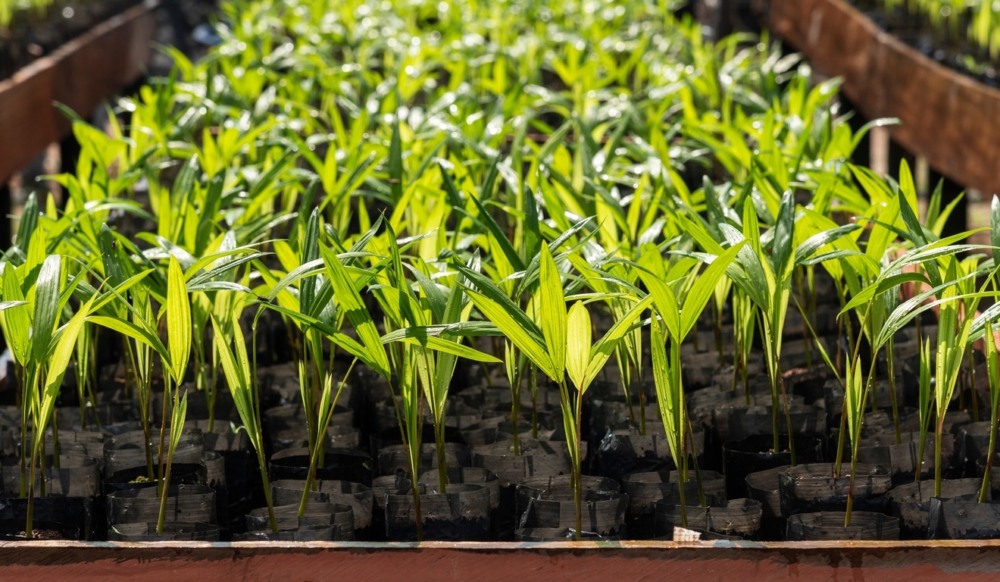
The idea is seductively simple: plant trees, capture carbon, and generate long-term environmental and financial returns. Yet behind this apparent elegance lies a stubborn financial reality. Scaling tree planting into a credible asset class has proven far more difficult than early proponents anticipated, particularly in today’s high cost of capital environment. The constraints are not ecological so much as structural, as it is embedded in project finance challenges to deal with a peculiar cash flow timing and offtake market structure.
At its core, large-scale afforestation and reforestation projects behave like some infrastructure assets with unusually delayed and uncertain revenues. This combination exposes investors to a cluster of risks that, taken together, make conventional financing models ill-suited. As a result, the sector has leaned heavily on equity and the voluntary carbon market (VCM) as a workaround. This solution, while functional in the short term, is inefficient and struggles to scale.
The project finance problem
Tree planting projects exhibit several classic project finance risks, further amplified by today’s high-interest rate environment. Trees, by definition, take time to grow; carbon sequestration and other monetisation forms lag initial capital deployment by years, sometimes decades.
This back-loaded cash flow profile introduces acute early-stage liquidity risk. Capital expenditures – land acquisition, site preparation, planting – are front-loaded, while revenues materialise only after biological growth milestones are met and verified. Debt service, however, typically begins much earlier. Without carefully structured financing, projects risk defaulting before reaching a positive cash flow.
Offtake risk further complicates the picture. Unlike traditional infrastructure projects, where long-term purchase agreements can de-risk revenues, carbon credit demand remains fragmented and price discovery inconsistent. The absence of deep, standardised markets makes revenue projections inherently uncertain.
Then there is permanence risk, the defining characteristic of nature-based assets. Trees can burn, be affected by disease, or suffer from changing climatic conditions. A forest that disappears erases not only physical capital but also the underlying environmental claim. For financiers, this introduces a layer of contingent liability that is difficult to hedge.
The equity trap
The cumulative effect of these risks makes traditional lenders reluctant to underwrite forest projects at an early stage. This introduces a structural bias towards equity-heavy capital structures, leading to an inefficient capital stack. Equity, being the most expensive form of capital, raises hurdle rates and constraints scalability. Projects that might be viable under a balanced debt-equity mix become less attractive when forced to rely predominantly on sponsor funding.
To bridge this gap, developers have turned to carbon credits as a quasi-equity instrument. By pre-selling or forward-selling credits in the VCM, projects can monetise future environmental benefits upfront. This mechanism injects liquidity and reduces immediate capital requirements, functioning as a form of “synthetic equity.”
Yet this solution is contingent on the health and credibility of the VCM itself – a market that remains structurally fragile.
The limits of the voluntary carbon market
The VCM has grown rapidly in the early 2020s, but its architecture is not designed for industrial-scale capital mobilisation. It is an opaque network with a decentralised and heterogeneous supply, and a concentrated demand structure. Credit quality varies widely, methodologies differ across registries, and pricing lacks standardisation.
Credits generated by a project may not command the expected prices or may even become unsellable due to shifts in market sentiment or regulatory scrutiny. Episodes of reputational backlash against certain credit types have underscored this vulnerability.
Liquidity is another constraint. Secondary markets are thin, and long-term hedging instruments are underdeveloped. This makes it difficult to lock in future revenues with confidence, increasing projects’ market risk.
Moreover, demand remains largely voluntary. Corporates purchase credits to meet self-imposed sustainability targets rather than regulatory obligations. This discretionary demand is inherently cyclical and sensitive to economic conditions. In downturns, as experienced in recent years, carbon credit purchases are among the first expenditures to be reduced.
Mais do Reset

COLUNA - JULIEDA PUIG
The global green economy has levelled up, and it already has its winners
Brazil is not among them. An LSEG report shows that global green business now amounts to US$10 trillion, making it the world's third-largest industry by market capitalisation

RESET IN ENGLISH
Nine myths about sustainable debt, and a one-trillion-dollar question
What is the cost of financing a company's future while looking only at its past sources of capital? That is the question every Board should be asking

COLUNA - WINSTON FRITSCH
The climate transition risk of America’s AI boom
How the expansion of artificial intelligence in the United States could pose a threat to the country's long-term competitiveness and financial stability

RESET IN ENGLISH
The sustainable debt market lost its innocence — thank goodness
The green-versus-brown purism and empty rhetoric are behind us; sustainability in finance is now getting serious, embracing the complexity of the real world
As a result, while the VCM provides a useful stopgap, it cannot alone support the scale of investment required for meaningful global reforestation.
Survival strategies in a constrained environment
Faced with these structural limitations, project developers have adopted a range of pragmatic – if imperfect – strategies to stay afloat.
One approach is to tap into cheaper sources of public or concessional debt. Development finance institutions, multilateral banks, and government-backed programmes can offer lower-cost capital with longer tenors and more flexible repayment profiles. However, such funding is limited in volume and often comes with complex and costly eligibility criteria.
Another strategy involves diversifying revenue streams. Some project companies reposition themselves as service providers, offering land management, biodiversity monitoring, or carbon accounting services alongside their core planting activities. While this can generate near-term cash flow, it shifts focus away from the primary objective and may dilute returns.
Consolidation has also emerged as a defensive tactic. Mergers and acquisitions allow developers to reduce overheads and extend financial runway. Opportunistic consolidation can mitigate burn rates, but it does little to address the underlying capital structure challenges.
These measures, while necessary, are ultimately palliative rather than curative. The sector requires more fundamental financial innovation.
Towards structural solutions
If tree planting is to become a scalable asset class, its financing model must evolve and several structural solutions need to be combined.
Sculpted debt with public or multilateral sponsor support offers one avenue. By aligning debt service schedules with projected cash flows – delaying principal repayments and tailoring amortisation profiles – projects can better manage liquidity risk. Sponsor guarantees or “wraps” can further enhance creditworthiness, enabling higher leverage with lower borrowing costs. This approach effectively bridges the timing mismatch between investment and revenue generation.
Securitisation of carbon credits represents another promising development. By aggregating future credit streams into tradable financial instruments, projects can access upfront capital from a broader investor base. This mirrors the evolution of other asset-backed markets, where illiquid cash flows are transformed into investable securities, especially if the biological asset could be insured.
These financial innovations, together with the ongoing expansion of demand through regulated carbon markets could fundamentally reshape the landscape. Unlike voluntary markets, compliance markets are driven by policy mandates, providing more stable and predictable demand. Integrating nature-based credits into regulated frameworks or creating hybrid systems that bridge voluntary and compliance markets could significantly enhance price stability and liquidity.
A capital markets challenge disguised as an environmental one
The ambition to plant trees at scale is often framed as an environmental imperative. While this is undoubtedly true, given its dual impact on climate and biodiversity, the primary bottleneck lies in financial engineering rather than ecological feasibility. The current model, trapped in equity dependence, is not conducive to large-scale capital deployment.
Unlocking growth in this sector will require a shift in perspective: from viewing tree planting as a niche sustainability initiative to treating it as a mainstream infrastructure asset class. This entails adopting the full toolkit of modern finance – structured debt and securitisation – while simultaneously strengthening the institutional foundations of carbon markets.